
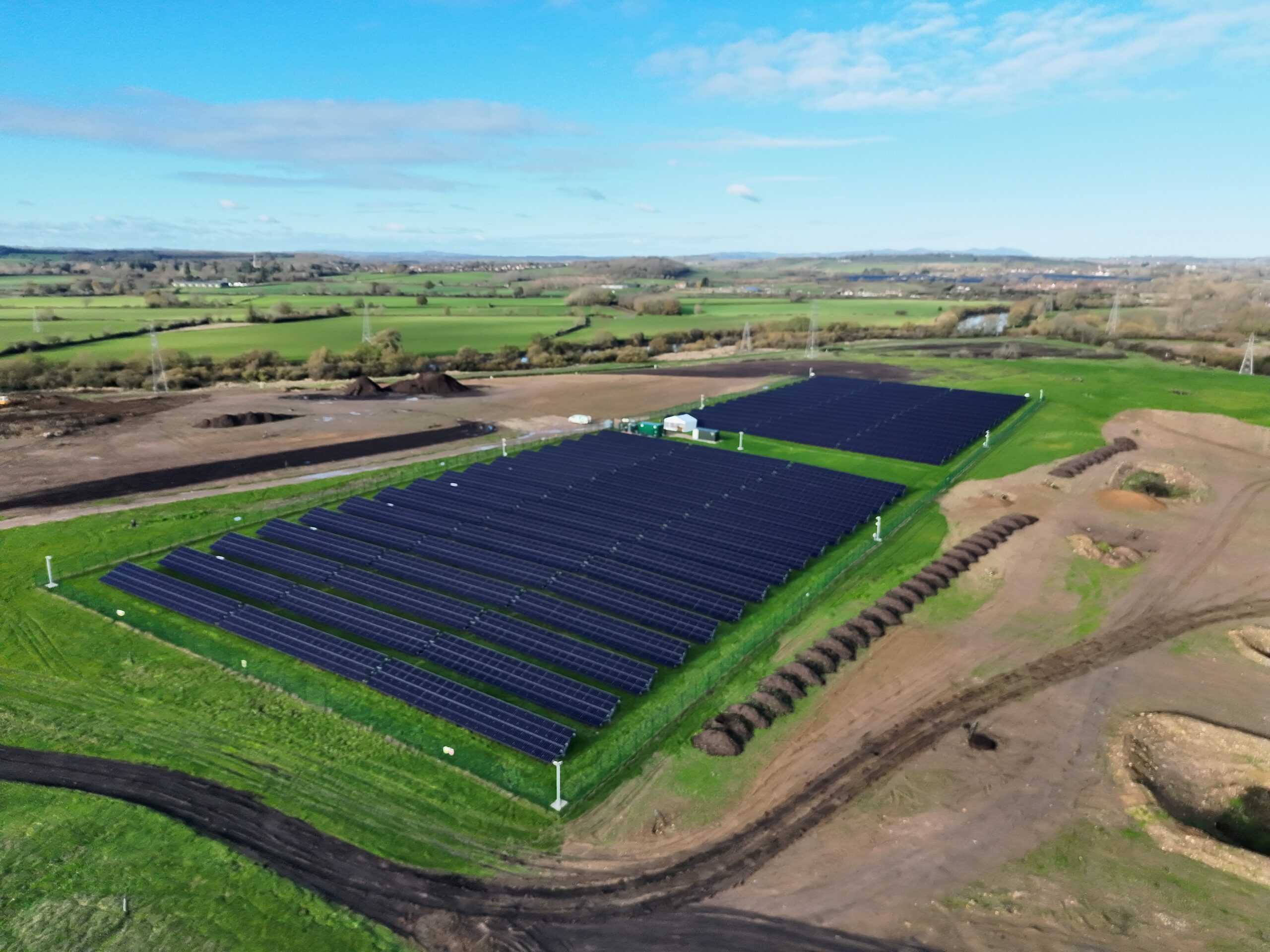
As the demand for renewable energy rises across the United Kingdom, solar farms are increasingly part of the conversation. Yet despite their growing presence, there remain widespread solar farm misconceptions. These misconceptions can generate resistance from local communities and landowners alike. At Harvest Green Developments, we have direct experience installing solar farms and working with landowners to navigate community concerns. Drawing on that experience, this blog post addresses common misunderstandings, explains how they are overcome in practice, and places solar farms in the wider context of renewable energy and responsible land use.
The misconceptions covered include environmental impact, land use conflict, effects on livestock and wildlife, and perceived drawbacks versus broader benefits. Each paragraph explains the misconception and offers insight based on factual evidence and industry best practice.
Misconception 1: Solar farms destroy landscapes and reduce biodiversity
A frequent concern is that solar farms disrupt the natural environment and reduce biodiversity. Critics often envision a sea of panels replacing grass, trees, and wildlife habitats.
In reality, well-designed solar farms (as you should always expect) can enhance local biodiversity. Modern projects incorporate habitat creation and land management practices that support native flora and fauna. Rather than clear-felling landscapes, solar installations often use low-impact ground mounting systems. Beneath and around panels, landowners and developers can plant wildflower mixes, install pollinator-friendly corridors, and establish areas of native scrub that attract insects, birds, and small mammals.
It is important to note that the solar industry increasingly embraces biodiversity net gain. This means that sites are planned not simply to avoid harm, but to actively improve ecological value. For example, sheep grazing (discussed further in the next section) promotes grassland health by preventing species-poor swards. Wildflower plantings and hedgerow enhancements further improve ecosystem resilience. We partner with landowners to develop ecological management plans tailored to local habitats. These plans ensure that solar farms support nature rather than degrade it.
Misconception 2: Solar farms eliminate agricultural use
Another common worry is that solar farms remove productive agricultural land from use. Some assume solar farms are incompatible with farming or that they consume land that could otherwise grow crops.
In practice, solar farms and agriculture can coexist through approaches such as agrivoltaics and managed grazing. Agrivoltaics refers to the combined use of land for both solar energy and agricultural production. In many UK projects, livestock such as sheep graze beneath and around arrays. Sheep are particularly suited to this role because they naturally keep grass at a manageable height, reducing the need for mechanical mowing and maintaining open land for biodiversity.
Sheep grazing beneath solar panels does not harm animal welfare. Panels are raised high enough to allow free movement and access to shelter from rain and sun. There are numerous operational sites across the UK where livestock graze safely alongside solar infrastructure.
Misconception 3: Solar farms only benefit developers, not local communities
It is often assumed that solar farms primarily serve large developers, with little benefit flowing to local communities or landowners.
The reality is more nuanced. Landowners benefit directly through long-term lease agreements that provide reliable income streams, particularly valuable for farms facing fluctuating agricultural returns. In many cases, solar farm developments also contribute to local economies through construction contracts, maintenance services, and employment opportunities.
From a community perspective, local councils and neighbourhood plans increasingly recognise the contribution of solar farms to national and regional renewable energy targets. Solar farms help reduce reliance on fossil fuels, improve energy security, and contribute to national climate commitments. In some areas, developers fund community benefit schemes, such as green space enhancements or educational initiatives. While these schemes vary by project, they demonstrate how solar farms can be part of a broader community value equation.
Misconception 4: Solar farms reduce land value
A persistent concern is that installing a solar farm will permanently reduce land value or limit future options for land use. Some worry that panels impose long-term constraints that make land less attractive for other purposes.
Land values are influenced by many factors, and evidence does not support a blanket decline in value due to solar installations. Solar farms are typically temporary uses of land, with planning permissions granted for defined periods. Once panels are decommissioned, land can return to its previous use or transition to another purpose.
From a landowner’s perspective, a well-structured lease for a solar farm can provide multi-decade income security without sacrificing future flexibility. Detailed planning applications include decommissioning plans that ensure all infrastructure is removed and land is restored at the end of its operational life.
We’ll always work with landowners to analyse the implications for land value, future development potential, and planning considerations. This helps landowners make informed decisions based on clear projections rather than assumptions.
Misconception 5: Solar farms are noisy and visually intrusive
Some people object to solar farms on the basis that they are unsightly or generate noise. Unlike industrial facilities, solar farms do not have moving parts that produce constant sound. In normal operation, there is no noise associated with energy generation.
Visual impact is subjective and depends on the landscape. Solar farms are generally low-profile installations that follow the contours of land. Developers are obliged to undertake landscape and visual impact assessments as part of the planning process. These assessments guide decisions on buffering, screening, and mitigation measures such as planting native hedgerows or woodland edges to soften views from nearby homes and public rights of way. Through careful design, it is possible to integrate solar farms into rural landscapes in ways that respect visual character and local preferences.
Misconception 6: Renewable energy from solar farms is not reliable
A final misconception is that solar energy is intermittent and therefore not a meaningful contributor to energy security. While it is true that solar generation varies with daylight and weather, solar farms remain a valuable component of a diversified energy system.
The UK’s grid operator manages a balanced energy mix, integrating solar with wind, hydro, battery storage, and flexible generation. Solar farms contribute significantly during daylight hours, especially in summer, reducing demand on fossil fuel plants and lowering carbon emissions. Advances in energy storage technologies further enhance the utility of solar generation by storing excess power for later use.
Solar farms help businesses and communities manage energy costs, reduce exposure to volatile fossil fuel prices, and support decarbonisation plans. Their role in a resilient, low-carbon energy system is well documented by regulators and independent analysts.
Overcoming solar farm misconceptions together!
Across the UK, solar farms continue to expand as part of the transition to renewable energy. While misconceptions persist, many are based on assumptions rather than evidence. By engaging with landowners, local authorities, and communities, developers can address questions about landscape, agriculture, biodiversity, visual impact, and economic benefit.
The key points for landowners and communities to understand are:
- Solar farms can enhance biodiversity when designed with habitat creation and ecological management in mind.
- Dual-use practices such as livestock grazing allow agriculture to continue alongside energy generation.
- Landowners benefit from long-term lease income without permanently restricting future land uses.
- Solar farms contribute to local and national renewable energy goals, reducing emissions and supporting energy security.
- Visual impacts and planning concerns can be managed effectively through assessment, mitigation, and community engagement.
Aa a business, we have installed solar farms on behalf of landowners across the UK. We understand the questions that communities raise because we address them regularly. Our team supports landowners through every stage of development, helping them communicate clearly with their neighbours and demonstrate how solar can be a positive force for land and energy use.
Solar farms are part of the solution to the UK’s energy and climate challenges. By moving beyond misconceptions and focusing on evidence, it becomes clear that the benefits of solar far outweigh the negatives, particularly on land that is otherwise underutilised or unsuitable for traditional agriculture.
