
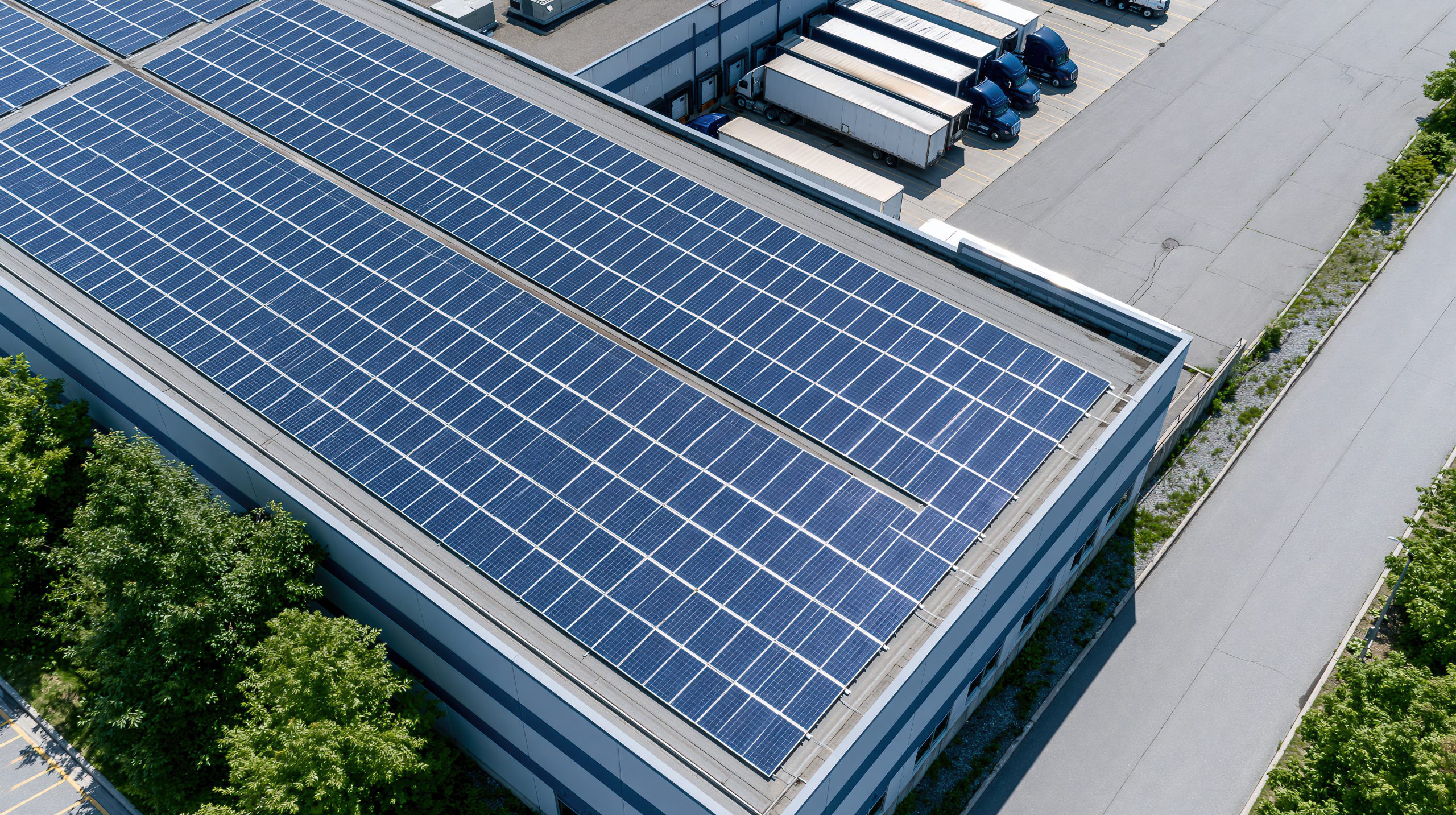
When a business is considering solar, the first questions are often straightforward: How many panels can we fit? How much electricity could we generate? How much could we save on our energy costs?
Our team are asking a much longer list of questions. Before a single panel is fitted, there are solar installer considerations covering the roof, electrical infrastructure, system design, shading, access, future energy requirements and how the installation will work around an operational business – these details can have a significant influence on the final solar PV system.
After all, as a team we being together more than 100 years of combined experience across the renewable energy industry. Over that time, we have worked across a wide range of commercial properties, and that experience has taught us that some of the most important details are easy to overlook when you are viewing a project from the customer’s perspective. So, we thought we would take you behind the scenes and explain five solar installer considerations that business owners may not immediately notice.
1. The condition and construction of your roof
From ground level, a commercial roof can look like a large, empty surface with plenty of space for solar panels but our team see something rather more complicated. One of the first solar installer considerations is whether the roof is suitable for the proposed system and installation method: the age, construction, covering, condition and pitch of the roof can all influence the approach.
Commercial buildings can have a wide variety of roof types, including standing seam systems, sheet metal, composite panels, flat roofs and other specialist commercial roofing arrangements. Each presents its own considerations.
The condition of the roof is also extremely important as we survey your site. A solar PV system is designed to operate for decades, so the expected lifespan of the existing roof needs to form part of the conversation. If significant roofing work is likely to be required in the foreseeable future, this may influence how the solar project should be approached with options that compliment both areas. This does not mean solar is not possible, but a retrofit solution may be more appropriate to combine roofing upgrades and renewable energy at once.
Our installers also look at what is already occupying the roof. Rooflights, vents, skylights, HVAC equipment, extraction systems and other rooftop plant can all affect the usable area available for panels. Designated access routes or areas that need to remain clear for maintenance are also considered from the very first design. This means the total roof area and the actual usable area for solar can be very different.
The mounting system is another consideration as we evaluate your roof. It needs to be appropriate for the roof construction and securely installed, while maintaining suitable weatherproofing and accounting for the loads associated with the solar array. These are details that are difficult to appreciate from the ground, but they are fundamental to a well planned commercial solar installation that wrks with your site, and designed bespoke based on what is on your roof.
2. Shading, orientation and everything else on the roof
A large roof does not necessarily mean every part of it is equally suitable for solar. Our team look closely at anything that could affect how much sunlight reaches the panels: trees, neighbouring buildings, chimneys, rooftop plant and different sections of the same building can all create shading.
The position of the sun also changes throughout the day and across the year. A section of roof that looks completely unobstructed during a site visit may experience shading at different times. Our design team therefore considers shading from the very start.
We also consider the orientation and layout of the proposed array. A commercial building may have several roof areas facing different directions. The best approach depends on the building, available roof space, electricity demand and wider system design. For example, an east and west-facing array can produce electricity across a broader part of the day, while other orientations may provide different generation characteristics. It’s important to know that there is no universal layout that works for every property. This is why experienced installers look beyond the simple question of how many panels can fit on the roof size. The position of each panel needs to be considered alongside the wider electrical and operational design of the system from the very start to maximise generation with all elements in mind.
3. Your existing electrical infrastructure
One of the most important solar installer considerations is something many business owners will never see: what happens behind the electrical equipment. Solar panels generate DC electricity, while electrical systems operate using AC electricity. Inverters convert the electricity generated by the panels so it can be integrated with the building’s electrical system. That means the existing electrical infrastructure needs to be understood by our team. Commercial buildings can have substantial electrical demands, large distribution boards, three-phase supplies, machinery and complex electrical arrangements.
Our team need to consider where the inverters can be positioned, how cables will travel from the roof, where the system will connect and how the existing electrical infrastructure will interact with the new equipment.
Cable routing is also important. A route may look simple on a drawing but present challenges once the installation team is on site. Existing services, plant rooms, fire compartments, structural elements and restricted access can all influence the most suitable route.
There are also considerations around cable sizing, voltage drop, protection, isolation and the wider electrical design.
If battery storage is included, the system becomes more complex again. The battery needs to be integrated into the wider electrical system and positioned in an appropriate location, with access for future servicing and consideration of how the system will operate. For a business owner, an inverter or battery may simply look like another piece of equipment but for our team, there is a lot more to consider before we come to site to install.
4. What your business will need from the system
Some of the most valuable solar installer considerations come from conversations with the people running the business. Your electricity consumption today is, of course, important, but so is what you expect to happen in the future and knowing the answers to the below questions influence the design of the solution best for your sites building.
- Are you expanding the premises?
- Are you adding electric vehicle charging?
- Are you installing new machinery?
- Are your operating hours changing?
- Are you expecting electricity demand to increase?
A manufacturing facility, warehouse, office, agricultural business and retail premises will have very different energy profiles. A business operating machinery throughout the day will have significant opportunity to use solar generation directly on site. Another business may have a different demand profile that makes battery storage or other energy management considerations more relevant.
Future plans matter too. A solar installation operates for decades, so designing solely around today’s circumstances may not always provide the most appropriate long term solution. This is why we encourage businesses to tell us what is happening across the organisation, even if a change is still at the planning or consideration stage. Something as simple as mentioning that a fleet of electric vehicles is being considered could become an important part of the wider energy conversation and how we can futureproof your installation for maximum impact now just now, but also in 10 and 20 years time.
5. How the installation will work around your business
There is another major solar installer consideration that becomes particularly important on commercial projects: the installation itself needs to work around your business. We’re aware a commercial building is rarely sitting empty while solar panels are being installed. We have worked on a large amount of sites where there are employees on site, deliveries arriving, customers coming and going, vehicles moving around the premises and production or other business activities continuing throughout the day.
Our projects and installation teams therefore think about the logistics of the project well before work begins. These questions can influence how the project is scheduled and delivered to minimise operational disruption:
- How will equipment reach the building?
- Where can materials be stored?
- What access is available?
- Will lifting equipment be required?
- Which areas need to remain operational?
- Are there specific site procedures that our team needs to follow?
Also, health and safety requirements, working at height, electrical isolation and the management of installation areas all need to be considered as part of the planning process to ensure the safety of everyone on site.
This also applies to access for future maintenance. Solar equipment will need to remain accessible after the installation is complete. Designing appropriate access from the outset is important for future inspections and maintenance.
Why solar installer considerations matter
As this information shares, a commercial solar installation involves considerably more than placing panels on a roof. The roof itself, the electrical infrastructure, sunlight, system layout, business operations, future energy requirements and installation logistics all form part of the picture. These are the kinds of solar installer considerations that experienced installation teams assess before work begins. They also explain why two commercial solar projects with similar-sized roofs can require very different approaches; every building has its own characteristics, and every business has its own energy requirements.
Our team brings together over 100 years of combined experience in the renewable energy industry. That experience helps us identify the details that may not be immediately obvious and understand how they can influence the design and installation of a commercial solar PV system. That is why we believe business owners should understand these considerations form our perspective too.
We understand solar is an investment for any organisation, so you should be able to understand why a particular system has been recommended, how it will work with your existing infrastructure and what has been considered during the design process. Our approach is built around education. We want businesses to have the information they need to ask informed questions and make confident decisions about their energy strategy. Because when you are considering commercial solar, the panels are only one part of the project; the experience, planning and technical considerations behind them are just as important.

