
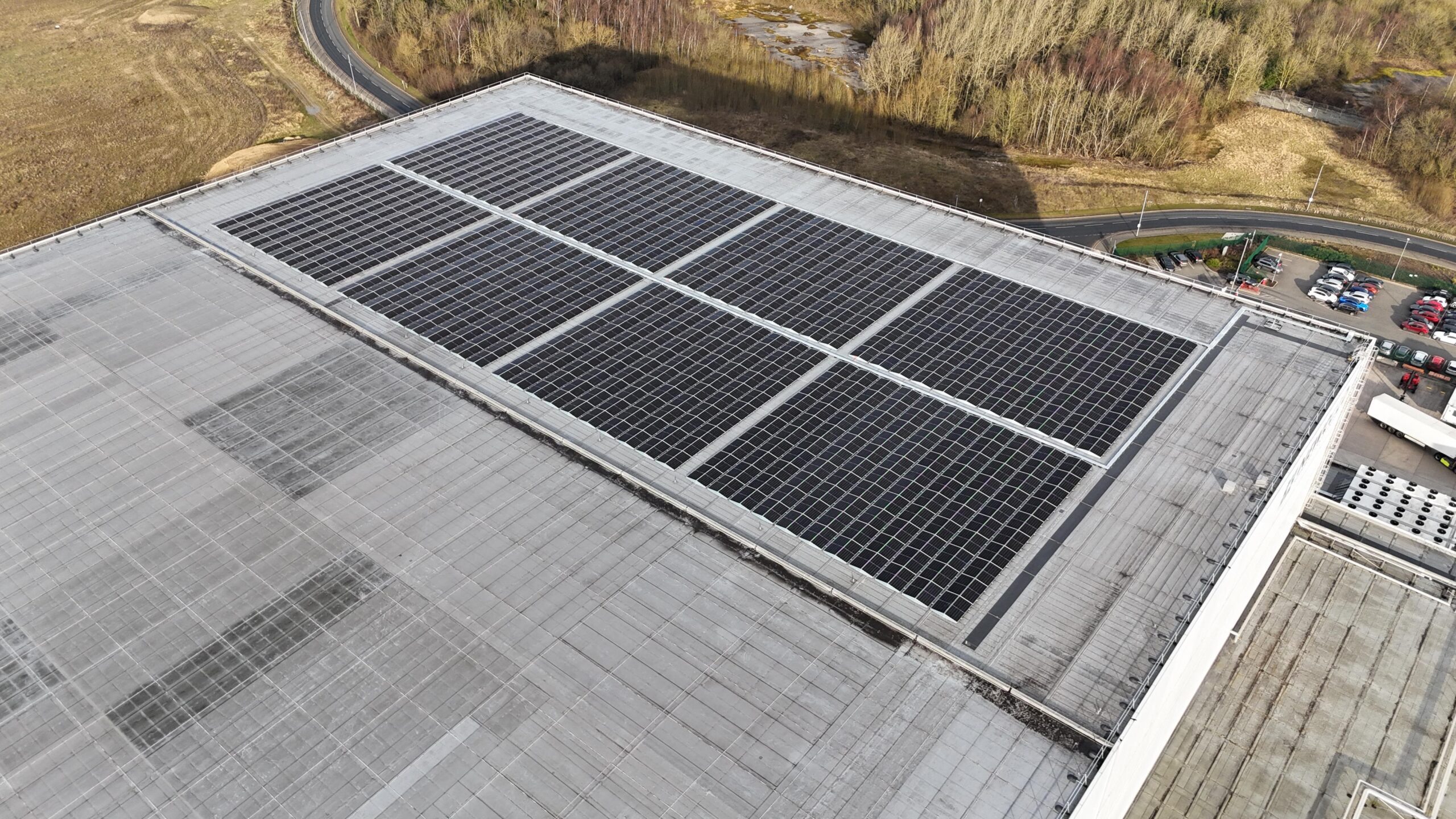
Warehouse solar is rapidly becoming one of the most effective ways for landlords to protect asset value, meet tightening regulations and attract long-term tenants. With energy costs remaining volatile and sustainability now firmly embedded in commercial decision-making, solar for warehouses is no longer a future consideration; it is a commercially sound investment that addresses today’s market realities.
For landlords of industrial and logistics properties, the challenge is that regulatory standards around energy performance are rising, tenant expectations are changing, and properties that fail to adapt risk reduced demand and declining value. Warehouse solar offers a clear route to future-proofing assets while delivering a strong return on investment. Depending on the size and scale, you are likely to see a return in less than four years.
Understanding EPC regulations for commercial warehouses
Energy Performance Certificate regulations are already influencing leasing decisions across England and Wales, and the requirements will only become more demanding over the coming years.
Landlords should be aware of the following key milestones:
- April 2023: All let commercial properties must have a minimum EPC rating of E.
- April 2025: Every let commercial property must hold a valid EPC certificate, even where no lease changes occur.
- 2028: The minimum EPC standard is expected to rise to EPC C.
- 2030: A further increase to EPC B is anticipated.
Warehouses that fail to meet these standards may become unlettable, placing rental income and asset value at risk. Improving EPC ratings is a core part of responsible asset management. Therefore, warehouse solar plays a significant role in improving EPC scores, particularly for large industrial buildings where roof space can be fully utilised to offset grid electricity consumption.
Why warehouse solar makes commercial sense
Warehouses are well-suited for solar installations. Their large, unobstructed rooftops provide the scale required to generate meaningful amounts of electricity. In many cases, these rooftops are underutilised assets with the potential to deliver long-term financial and environmental value.
Solar panels installed on warehouse roofs generate clean electricity that can be used on-site or supplied directly to tenants. This reduces reliance on grid electricity and lowers overall energy costs. From an EPC perspective, on-site renewable generation significantly improves a building’s energy performance rating.
Short return on investment for solar on warehouses
One of the best reasons to invest in warehouse solar is the short return on investment period. Due to the scale of installations and consistent daytime energy usage often associated with industrial tenants, warehouse solar systems typically deliver strong financial performance. These savings can be forecast with Harvest Green Developments after initial conversations, so you can understand the payback period swiftly to aid tour decision-making process.
In many cases, the payback period for warehouse solar can be achieved within a few years. This is driven by:
- High levels of on-site electricity consumption
- Rising grid energy prices
- Improved system efficiencies and falling technology costs
- Long operational lifespans of modern solar panels
Once the system has paid for itself, the electricity generated continues to provide low-cost energy for decades. This creates a long-term hedge against energy price volatility and enhances the property’s overall value.
Attracting and retaining tenants with warehouse solar
Energy costs are a major operational concern for warehouse tenants, particularly in sectors such as logistics, manufacturing, cold storage and distribution. Buildings with solar installations have a fantastic advantage over competitors.
When presented with two comparable warehouse options, tenants are increasingly likely to choose the building that provides access to lower and more predictable energy costs. Warehouse solar directly supports this decision by reducing exposure to fluctuating grid prices, too.
From a landlord’s perspective, this translates into:
- Increased tenant demand
- Reduced void periods
- Stronger lease renewals
- Improved tenant relationships
In some cases, landlords can also explore private wire arrangements or competitive power supply agreements, further enhancing the commercial appeal of the asset.
Protecting asset value in a changing market
The commercial property market is evolving quickly. Investors, lenders and occupiers are placing greater emphasis on environmental performance and long-term resilience. Warehouses that do not align with these expectations risk becoming stranded assets.
Warehouse solar helps future-proof properties against regulatory changes and market pressures. By investing now, landlords demonstrate proactive asset management rather than reactive compliance.
This forward-thinking approach supports:
- Stronger valuations
- Improved investor confidence
- Enhanced ESG credentials
- Greater resilience to regulatory risk
As EPC requirements move towards C and B ratings, properties without a clear upgrade strategy may face costly retrofits under time pressure. Solar installations implemented today can form a central part of a long-term compliance roadmap.
Supporting tenant ESG and net zero commitments
Many warehouse occupiers are under increasing pressure to report on carbon emissions and energy usage. Supply chain requirements, corporate sustainability goals and investor scrutiny are all driving demand for measurable carbon reductions.
Warehouse solar enables landlords to offer buildings that actively support these objectives. Solar-generated electricity delivers verifiable carbon savings, providing tenants with the data they need for ESG reporting. With solar, your building becomes an asset that actively contributes to occupiers’ sustainability targets, strengthening its appeal across a wide range of industries.
Why acting now matters
Delaying investment in warehouse solar means delaying the benefits. Rising EPC standards, increasing energy costs and upcoming component pricing are already influencing the market, this is without consumers pressure for more sustainaqble buildings.
Early adopters of warehouse solar benefit from:
- Improved EPC ratings ahead of regulatory deadlines
- Immediate reductions in energy costs
- Stronger tenant engagement
- Long-term asset protection
Turning roof space into long-term value
Warehouse rooftops represent one of the most scalable opportunities for on-site renewable energy in the commercial property sector. With the right system design and installation partner, warehouse solar can deliver consistent financial returns while addressing regulatory and environmental responsibilities.
For landlords looking to enhance asset value, attract quality tenants and remain compliant with evolving EPC regulations, warehouse solar is a proven and practical solution. By acting now, landlords can transform unused roof space into a reliable source of income, improved efficiency and long-term security for their portfolio.

